Why You Can't Speak German (Even Though You Understand It)

You've been studying for months. You can read German signs, follow simple conversations, understand Duolingo exercises. But when someone asks you a question in German, your mind goes blank.
This happened to me in France when I tried to order internet service. Asked "parlez-vous anglais?" — they said NO. I didn't know what to do because it was above my level. Had to call back later. That moment made me realize: understanding and speaking are completely different skills.
The Problem: Recognition vs Production
Most language apps — Duolingo, Babbel, Memrise — train recognition, not production.
Recognition: You see 4 options and pick the right one.
Production: You build the sentence from scratch with no hints.
Recognition is passive. Your brain sees "der Mann" and recognizes it means "the man." Production is active. You have to remember der (not die or das), construct the sentence, and say it out loud.
This is why you freeze: You trained your brain to recognize patterns, not produce them. When someone asks "Wo wohnst du?" you understand the question perfectly. But forming the answer — "Ich wohne in..." — requires a skill you never practiced.
Why Apps Make This Worse
Most beginner apps optimize for speed and gamification. You tap through exercises fast, get dopamine hits from streaks and points, and feel like you're progressing.
But look at what you're actually doing:
- Multiple choice: Pick from 4 options
- Fill in the blank: Choose from a word bank
- Translation: Type the English, app shows you the German
None of this forces you to produce German from memory. You're building a reading skill, not a speaking skill.
I went through this exact thing with Duolingo. Did difficult grammar exercises but had no clue what the actual rules were. Then sat down at the Goethe A2 exam in Winterthur and watched most people struggle with the speaking part — which is ironically the most important for the C permit.
What Actually Works
1. Practice Speaking Out Loud (Even Alone)
You don't need a conversation partner. Just talk to yourself in German.
- Describe what you're doing: "Ich mache Kaffee. Ich gehe zur Arbeit."
- Answer imaginary questions: "Wie heißt du?" "Ich heiße..." "Wo wohnst du?" "Ich wohne in..."
- Narrate your day in simple German
This forces the production pathway. Your brain has to construct sentences without any hints.
2. Build Sentences, Don't Pick Answers
Stop doing multiple choice exercises. Start doing exercises where you have to type or say the full sentence from scratch.
If you see a prompt like "Say: I go to work" — type or say "Ich gehe zur Arbeit" without looking at options. Get it wrong. Get feedback. Try again. (Struggling with sentence structure? See our German word order guide.)
3. Practice With Speaking Exercises That Give Feedback
The gap between understanding and speaking closes fastest when you:
- Speak out loud (not just in your head)
- Get immediate feedback on mistakes
- Repeat until it's automatic
Kids don't learn by reading flashcards. They learn by speaking, making mistakes, and trying again. Adults need the same thing — just more structured.
The Hard Truth
If you've spent 100 hours on Duolingo and still can't speak, it's not your fault. The app wasn't designed to teach speaking. It was designed to keep you engaged.
Being Swedish helps me a bit — we have similar sounds (ü, ch) that many Anglo-Saxon learners really struggle with. But even with that advantage, when the German grammar got complex in my courses, I felt completely lost. They threw examples at you without explaining the rules. (Topics like modal verbs and separable verbs especially confused me.)
The mistake I made early was doing a lot of passive stuff and then freezing when I actually had to say something. Working full-time, studying 20-30 minutes per day — you don't have time to waste on methods that don't work.
What To Do Next
- Stop relying on multiple choice. If an app lets you tap your way through, it's not teaching you to speak.
- Start speaking daily. Even 5 minutes of talking to yourself in German beats an hour of passive exercises.
- Practice production, not recognition. Build sentences from scratch. Say them out loud. Get feedback.
- Accept it will feel hard. Speaking always feels harder than reading because it is. That's normal. Push through it.
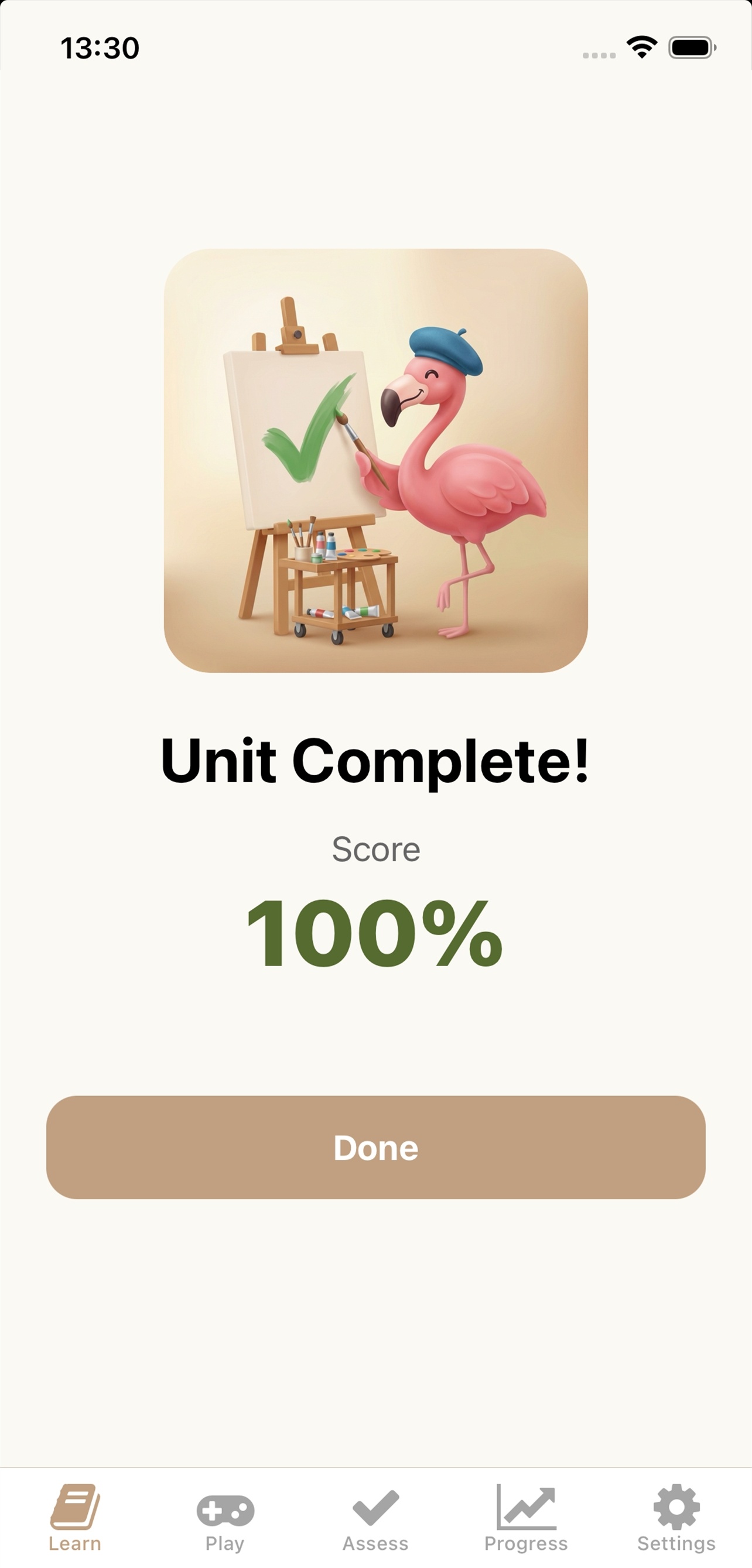
Practice Speaking German with Flamingua
Flamingua was built to solve this exact problem. After spending 2000 CHF on courses that never made me actually speak, I built an app that forces production from day one.
✓ Speaking exercises with AI feedback (not multiple choice)
✓ Build full sentences from scratch (no word banks)
✓ Pronunciation feedback on your actual voice
✓ Grammar explained clearly before you practice
✓ Designed for A1-A2 learners preparing for Goethe or daily life
Try the first 9 lessons free. No credit card required.