German Dative Case: When and How to Use It

The dative case is where German grammar starts getting complex. Accusative and dative — I still mix them up sometimes, honestly. Probably because when the grammar got complex in my courses, I felt completely lost. They just threw examples at you without really explaining the why.
Here's the simple version: dative is for indirect objects (who receives something) and after certain prepositions and verbs. Once you know which situations trigger dative, the rest is just memorizing the article changes.
What Is the Dative Case?
The dative case marks the indirect object — the person or thing that receives something.
Example:
"Ich gebe dem Mann das Buch." — I give the man the book.
- das Buch (the book) = direct object (accusative) — the thing being given
- dem Mann (the man) = indirect object (dative) — who receives the book
In English we say "I give the book to the man." German drops the "to" and uses the dative case instead.
Dative Articles
The articles change in dative. Here's what you need to memorize:
| Gender | Nominative | Dative | Example |
|---|---|---|---|
| Masculine | der Mann | dem Mann | mit dem Mann (with the man) |
| Feminine | die Frau | der Frau | mit der Frau (with the woman) |
| Neuter | das Kind | dem Kind | mit dem Kind (with the child) |
| Plural | die Kinder | den Kindern | mit den Kindern (with the children) |
Memory trick: All dative articles end in -m or -n. Dem, der, dem, den.
When to Use Dative
1. After Certain Prepositions (Always Dative)
These prepositions always trigger dative:
- aus (out of, from) — Ich komme aus dem Haus. (I come out of the house.)
- bei (at, near) — Ich wohne bei der Arbeit. (I live near work.)
- mit (with) — Ich fahre mit dem Bus. (I go by bus.)
- nach (after, to) — Nach dem Essen gehe ich. (After eating, I go.)
- seit (since) — Ich lerne Deutsch seit einem Jahr. (I've been learning German for a year.)
- von (from, of) — Das Buch ist von dem Lehrer. (The book is from the teacher.)
- zu (to) — Ich gehe zu dem Arzt. (I go to the doctor.)
2. With Certain Verbs (Dative Verbs)
Some German verbs always take a dative object:
- helfen (to help) — Ich helfe dem Mann. (I help the man.)
- danken (to thank) — Ich danke der Frau. (I thank the woman.)
- gefallen (to please) — Das gefällt dem Kind. (The child likes it.)
- gehören (to belong to) — Das Auto gehört dem Lehrer. (The car belongs to the teacher.)
- schmecken (to taste good to) — Das Essen schmeckt mir. (I like the food / The food tastes good to me.)
Why is this weird? In English we say "I help him" (accusative). In German you help to someone (dative).
3. For Indirect Objects (Giving, Telling, Showing)
When you give, tell, or show something to someone, that person is in dative:
- Ich gebe dem Mann das Buch. (I give the man the book.)
- Ich sage der Frau die Wahrheit. (I tell the woman the truth.)
- Ich zeige dem Kind das Foto. (I show the child the photo.)
Common Mistakes
- Forgetting dative verbs: "Ich helfe
den Mann" is wrong. It's "Ich helfe dem Mann." The verb helfen takes dative, not accusative. - Mixing accusative and dative prepositions: "mit" is always dative. "für" is always accusative. Don't guess — memorize the lists.
- Plural dative -n: Plural nouns in dative add -n at the end (if they don't already have one). "mit den Kindern", not "mit den Kinder."
How to Practice
- Memorize the dative prepositions: aus, bei, mit, nach, seit, von, zu. Make flashcards. Quiz yourself until they're automatic.
- Learn dative verbs as you encounter them: Don't try to memorize all of them at once. When you learn helfen, remember it takes dative. Add it to your list.
- Practice with full sentences: Don't just drill "dem Mann, der Frau." Use them: "Ich gebe dem Mann das Buch." Say it out loud. Speaking forces you to commit.
- Accept the confusion: Accusative and dative mix-ups are normal at A1. Even after courses, I still pause sometimes. You're aiming for 70-80% accuracy, not perfection.
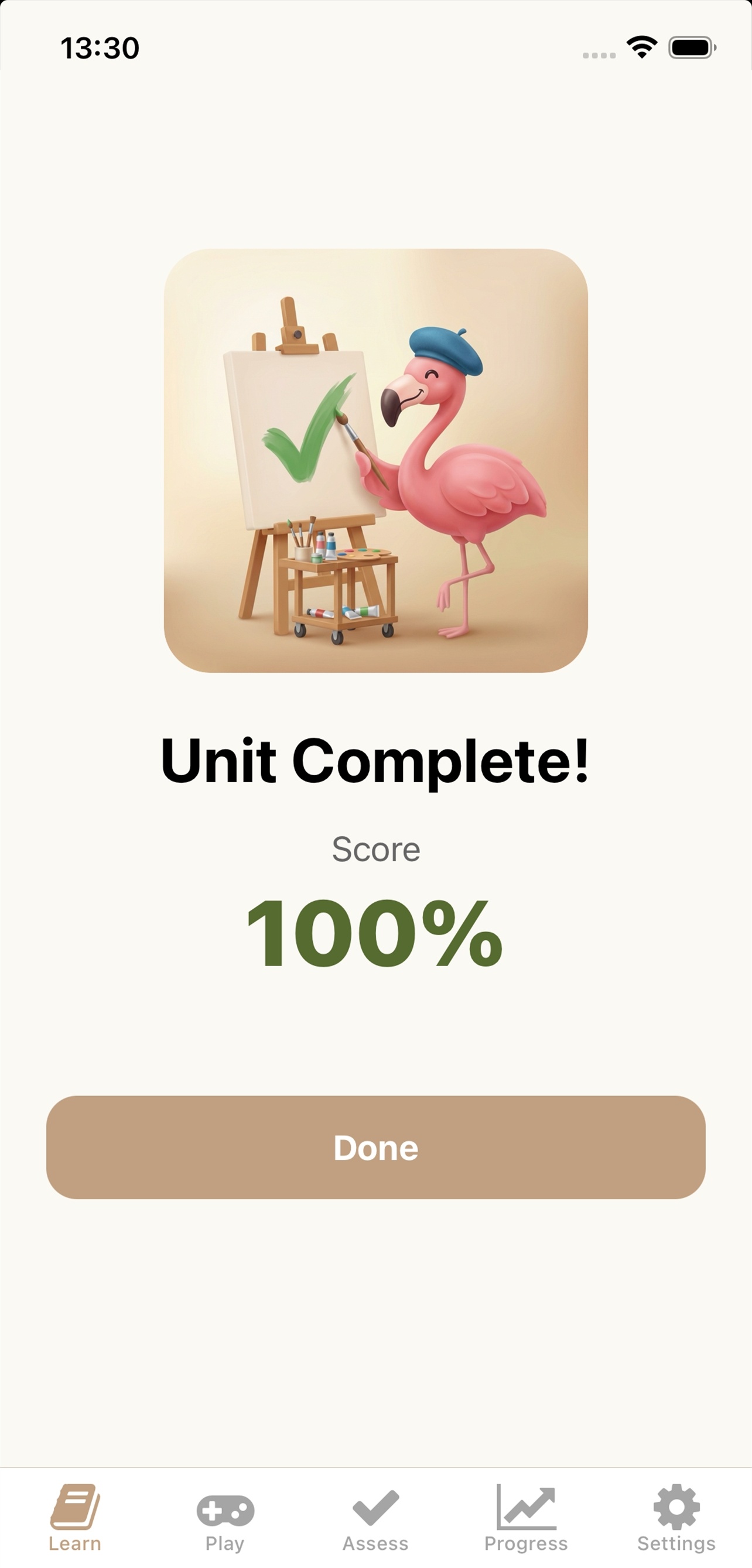
Practice German Dative Case with Flamingua
Flamingua teaches German cases through structured exercises and speaking practice.
✓ Dative taught in context (not just tables)
✓ Speaking exercises that force correct case usage
✓ Immediate feedback when you make mistakes
✓ Designed for A1-A2 learners preparing for Goethe or daily life
Built after I spent 2000 CHF on courses in Switzerland that left me guessing cases. Try the first 9 lessons free.